‘Dans Ma Rue’, Ioana Aron
In the architecture of contemporary art, certain projects do more than fill a room—they create a world. Romanian-born, Paris-based artist Ioana Aron has spent the last decade building such a world: Dans Ma Rue, an expansive, immersive, autobiographical installation that reconstructs the idea of a street as a living archive of migration, memory, and feminist artistic lineage.
As the project moves toward its next phase—its first large-scale, permanent spatial realization — Opera Art Advisory & Collective is honored to present a comprehensive spotlight on Aron’s vision, practice, and evolving Parisian “rue.”
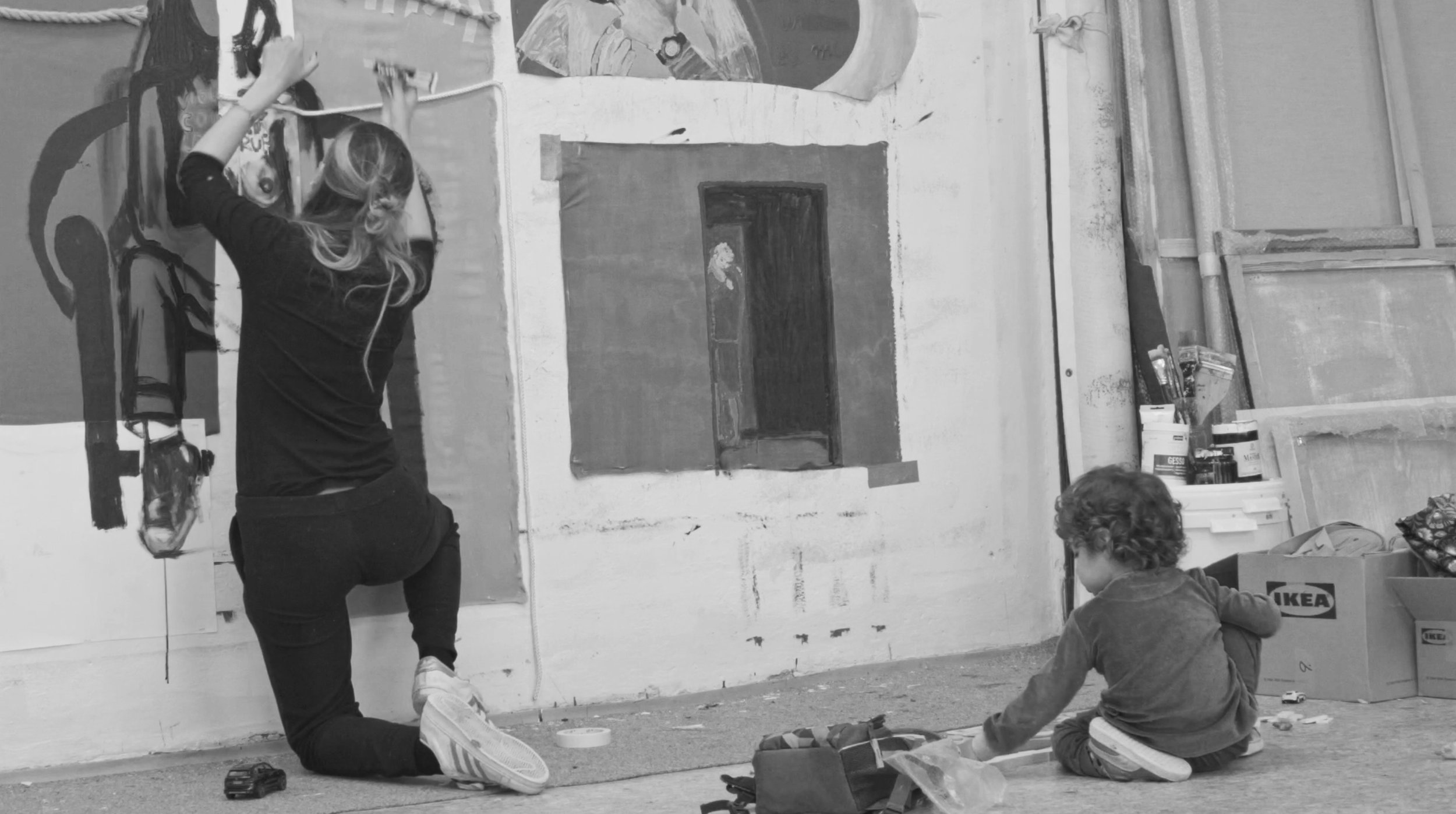
The Artist: Painting, Text-Image Thought, and the Female Creative Lineage

“I am an artist driven by the intricate interplay of text and image in our media-saturated world,” Aron writes.
This interplay has guided her through a career that spans painting, textiles, writing, performance, installation, and editorial work. International residencies, global exhibitions, and doctoral research have shaped her approach, while her role as co-founder and Editor-in-Chief of ETAJ magazine reflects a fierce commitment to artists authoring their own narratives.
Her early career was marked by nomadism and experimentation—“a prodigy,” as Romanian curator Simona Vilău described her, whose “unsettled spirit and aerial character” cultivated an oeuvre abundant in paintings, letters, objects, installations, and poetic fragments.
By 2019, art historian Magda Cârneci noted her transition into a deeper self-interrogation: an assemblage practice that embraced abstraction, collage, and psychological introspection with “unfettered and courageous” sincerity.
Aron’s artistic biography spans Bucharest, Seoul, Berlin, New York, Havana, Milan, Barcelona, Paris, and more. Residencies at the Cité Internationale des Arts and Arthaus in Havana left lasting imprints, as did her Ph.D. research on text-image relationships at the National University of Arts in Bucharest. Her book The Field. IL Y A, now part of the MNAC Bucharest collection, exemplifies her commitment to expanding painting beyond standard formats.
This breadth of experience forms the conceptual and material foundation of Dans Ma Rue.
Paris: A Moveable Feast—But Only If You Return
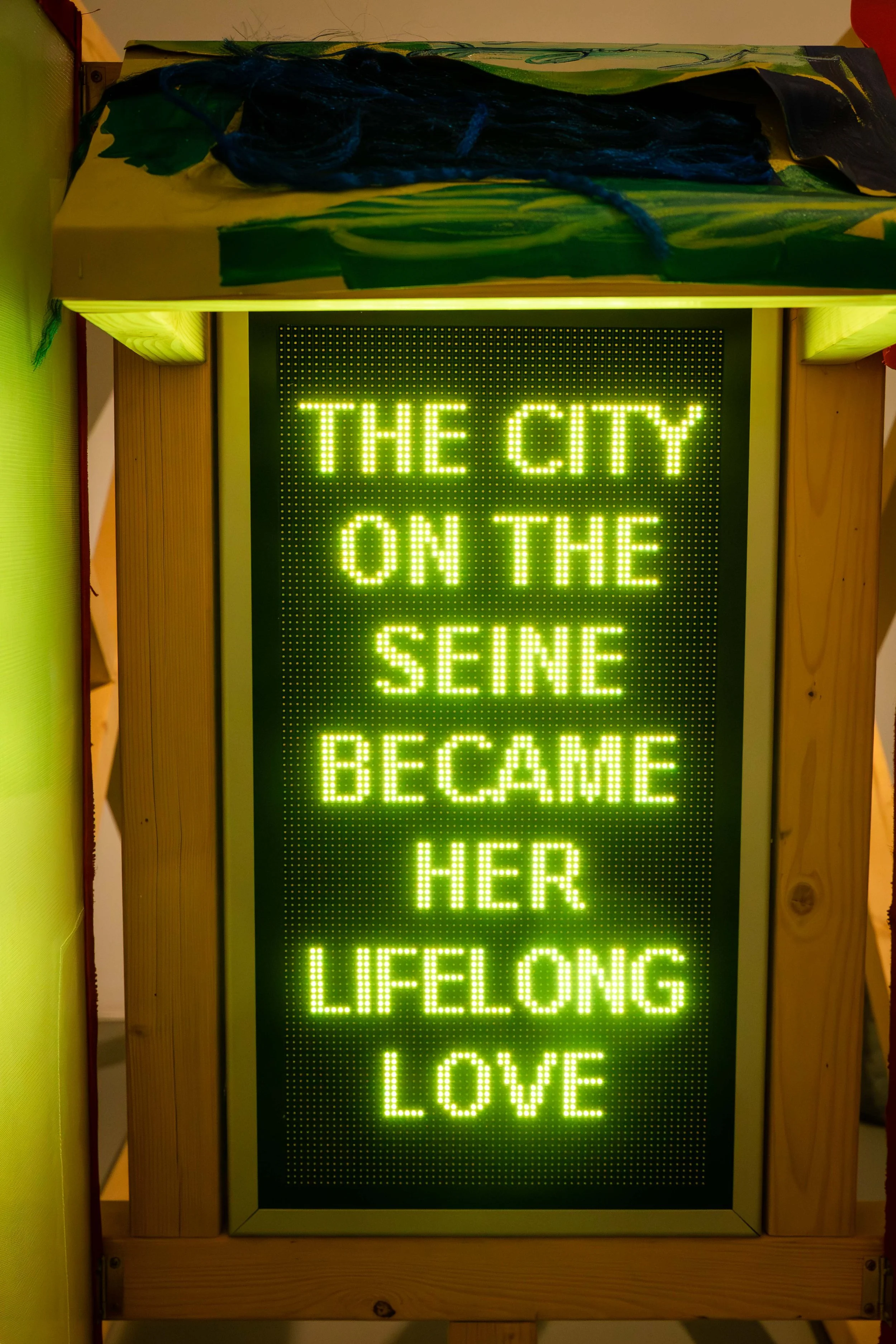
In Dans Ma Rue’s project book, PhD art historian and curator Beth S. Gersh-Nešić begins with Hemingway’s famous line:
If you are lucky enough to have lived in Paris as a young man [...] Paris is a moveable feast.
But as Gersh-Nešić argues, Hemingway’s sentiment “rings hollow” for many foreigners. Paris does stay in one’s memory—but more often, one feels compelled to return, to reorient oneself in its labyrinth of quartiers, arrondissements, bridges, and riversides.
Each long-term visitor or immigrant carries a personal Paris, a mental map shaped by homebases and proximities: the street one lived on, the café one frequented, the alleys that filled one’s solitude or one’s joy.
For Aron, this personal Paris—this micro-geography of belonging and displacement—is the root of Dans Ma Rue.
It is an attempt to build, from memory and material, the Paris of immigrant women artists whose contributions shaped the city while remaining largely unacknowledged.
Paris of the Mind, Body, and Spirit
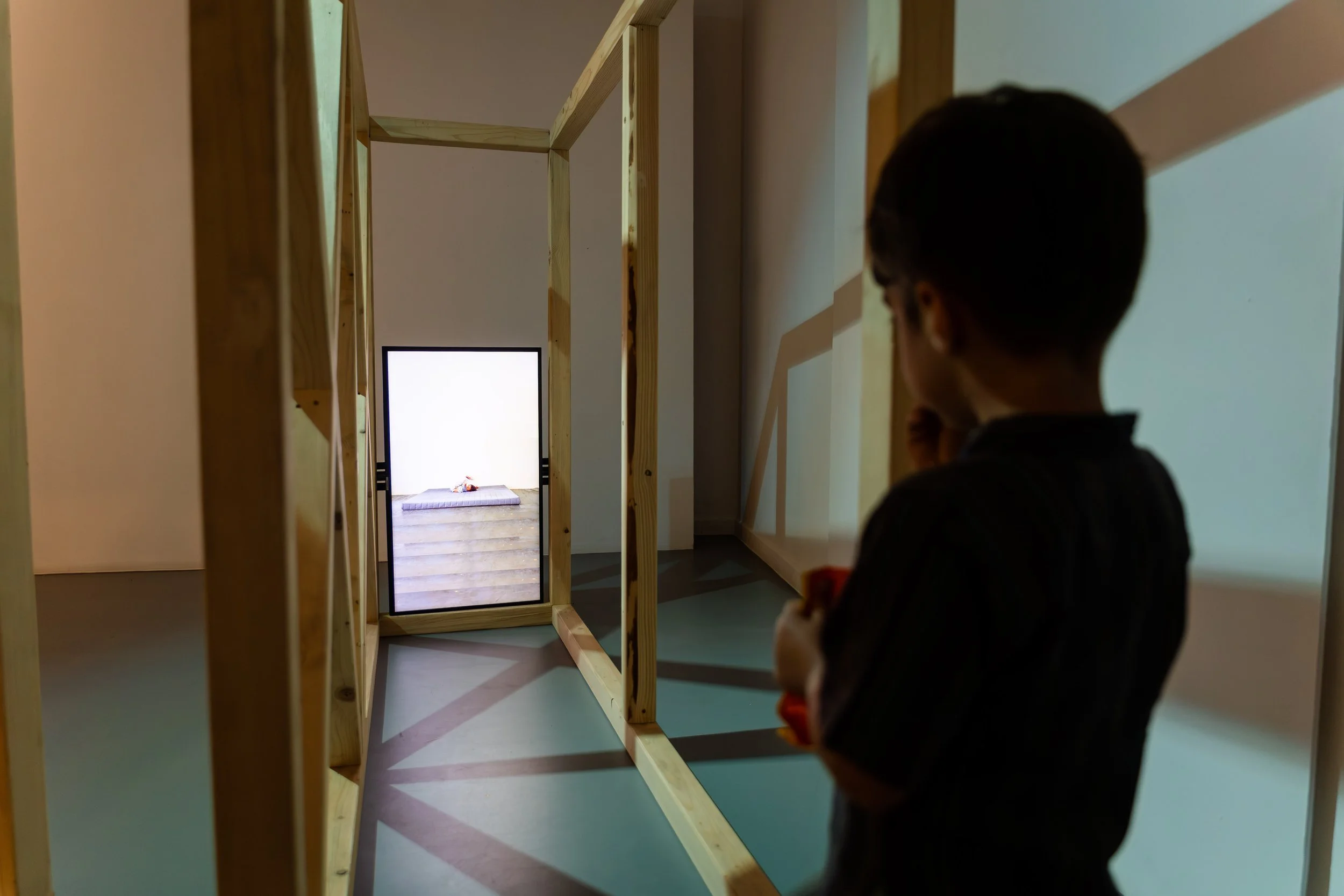
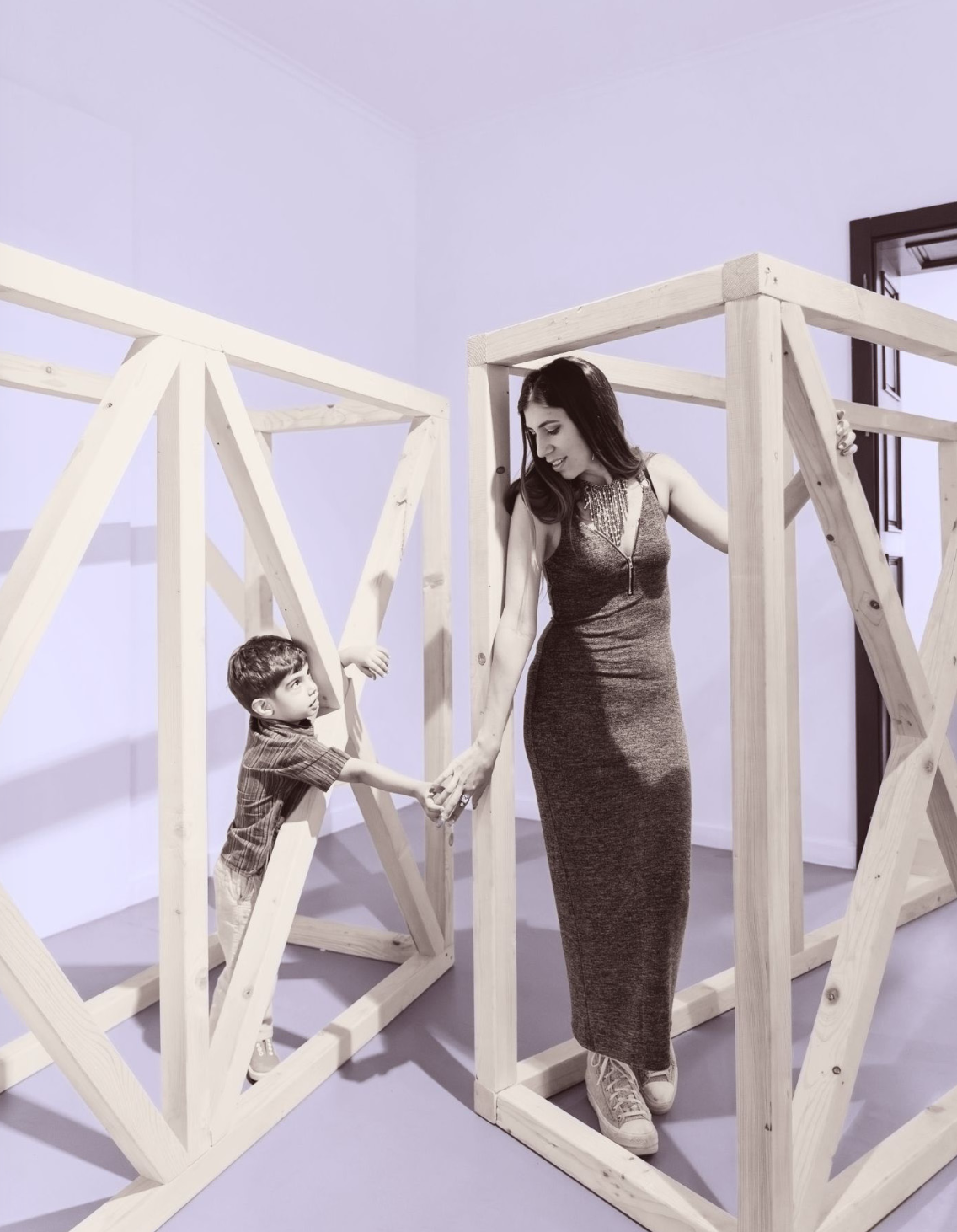
Aron describes Dans Ma Rue as a “Paris of the mind, body, and spirit.” It is not (only) documentary but experiential—a space where histories meet imaginaries, where architecture becomes metaphor, and where the visitor navigates a labyrinth whose nucleus is the artist’s own son.
The installation asks:
Which Paris belongs to which immigrant women artists?
Where did they walk, work, struggle, dream?
What streets shaped their lives—and how did those spaces enter art history?
Aron’s “rue” is both homage and self-portrait. It draws on the lives of artists such as Carmen Herrera, Milada Marešová, Leonor Fini, and other women whose Parisian experiences defined their artistic trajectories. Through them, Aron proposes a plural history: one that recognizes that Paris’s artistic identity is inseparable from the migrants who made it.
A Conceptual Street, A Walkable Community
Gersh-Nešić describes Dans Ma Rue as a conceptual installation where visitors become performers:
“No matter how structured, it must be considered a conceptual piece, for its aim is to capture the ephemeral… Akin to Performance Art, the visitor becomes part of the action, part of a transient community.”
Each visitor, by entering Aron’s street, temporarily inhabits its social and emotional fabric. The installation becomes a living assemblage—part painting, part architecture, part performance, part commune. It is a space that happens, not just a space that is.
Materiality: Painting, Painting, and Painting
Art critic Călina Coman describes Aron’s practice as rooted in painting—even when it extends into sculpture, textile, or virtual space:
“Painting contains her ideology… Though Dans Ma Rue presents itself as a recovery of artists who found in Paris their spiritual home, it also becomes a global self-portrait of a migrant woman artist.”
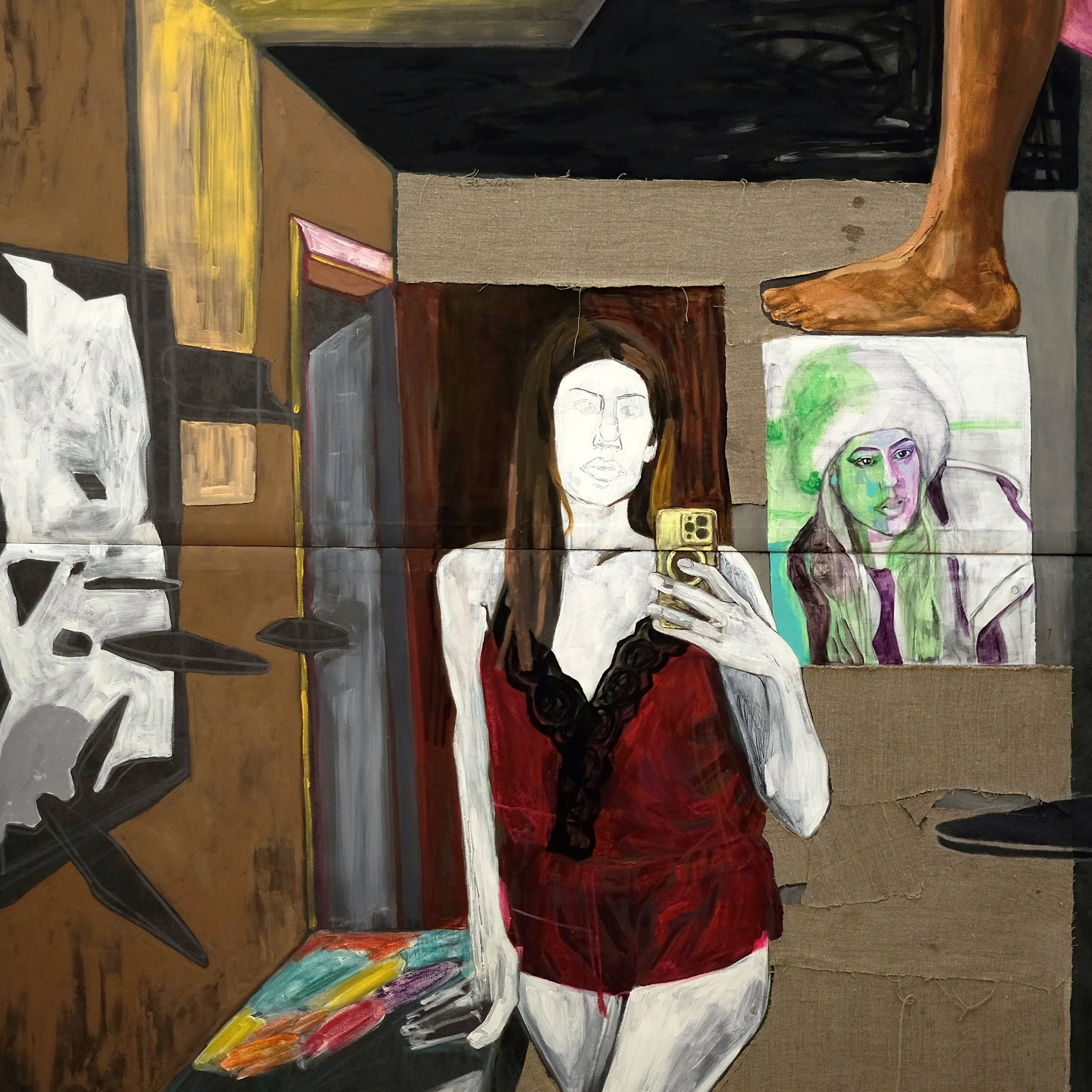
The installation’s materiality draws from:
Sewn and recycled textiles
Wooden façades and sculptural modules
Digital projection and video
Photography and drawing
Assemblage and architectural intervention
And, nonetheless, painting
Projects such as Spots (2014), Windows (2014–2017), and 3D Hotel (2016–2019) laid the groundwork for Dans Ma Rue’s fusion of documentation, archiving, performance, and spatial storytelling.
Aron lives with her painting—in thought, on paper, on canvas, in space, and in installation.
Dans Ma Rue becomes a “painting for a lifetime.”
The Artist’s Statement: A Living Work-In-Progress Archive
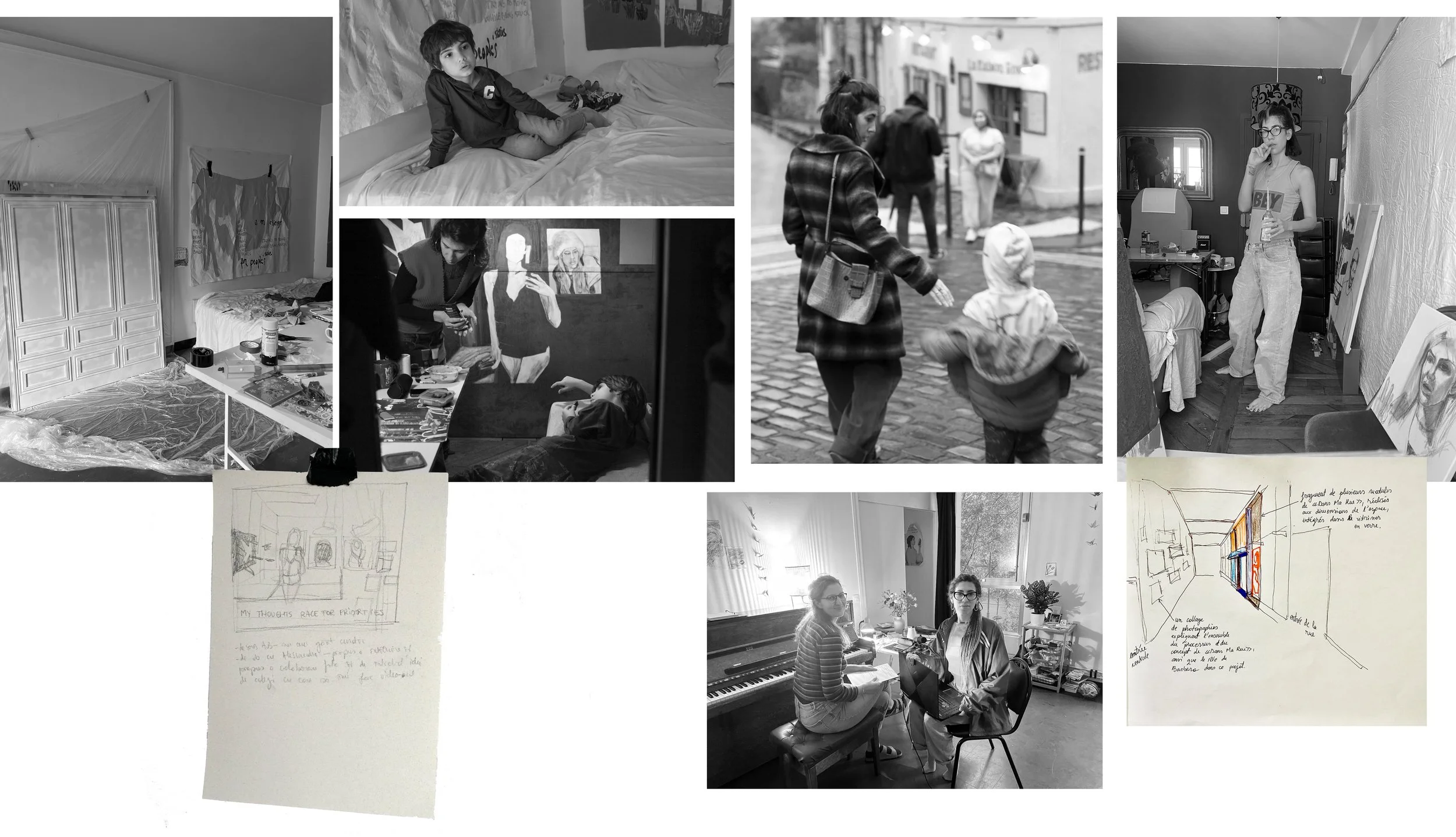
Aron writes:
“Dans Ma Rue is a living work-in-progress archive of the streets of Paris—spaces shaped by centuries of migration, layered with footsteps, languages, and dreams.”
The façades are skeletal, permeable to wind and light. The projections reinterpret Parisian architecture. Works like Blue Facade (2024) and 24 Rue de Fleurs (2022) merge textile, light, and digital image into hybrid structures that hold space for overlooked histories.
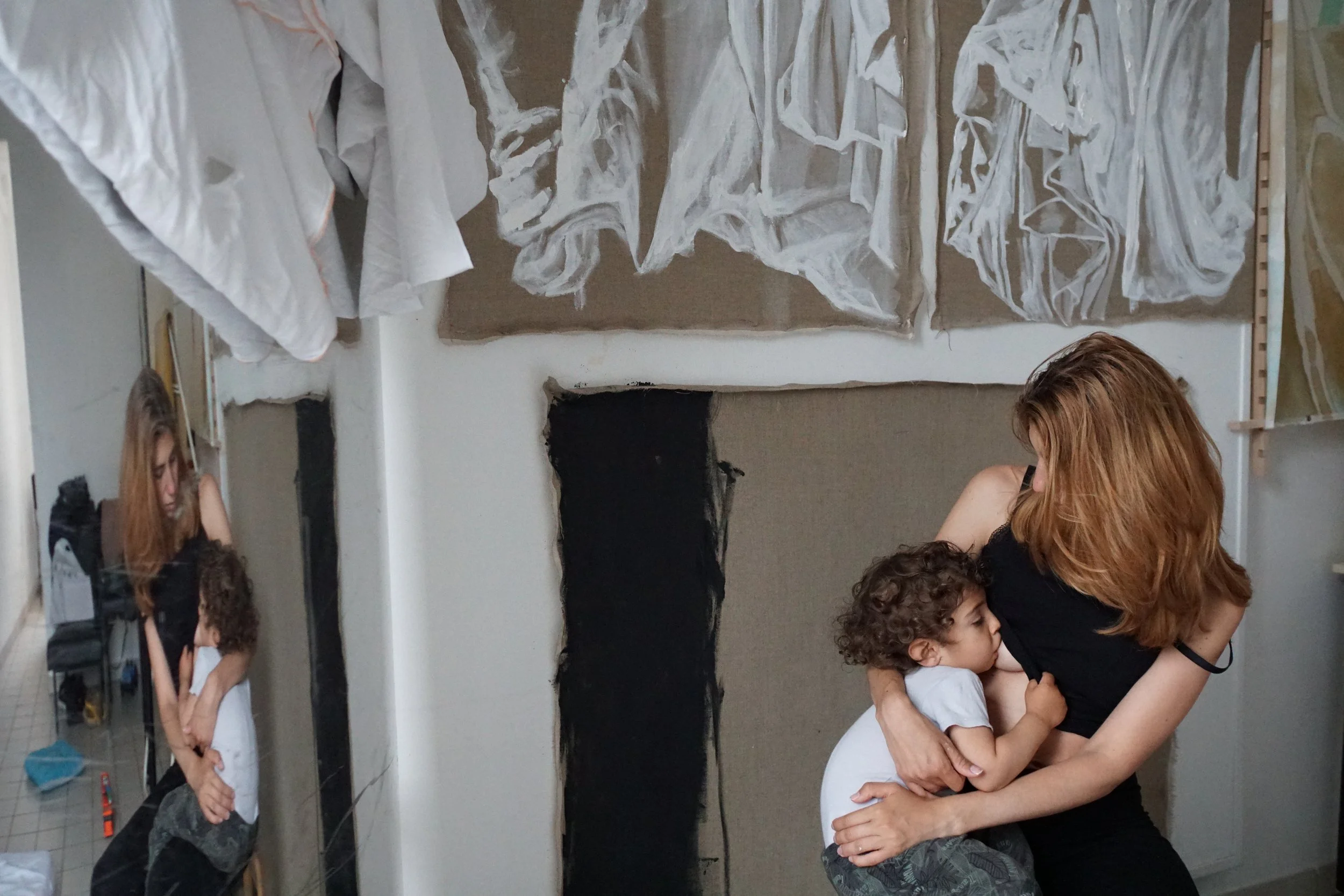
The installation is deeply personal:
”It developed alongside the birth of my son, who has accompanied me to every city and residency… His longing to touch and engage with art inspired a project where artworks can be entered, felt, and lived.”
This intimate methodology becomes a civic one—inviting community through tactility, scale, and spatial navigation.
Form: A Labyrinthine, Modular Environment
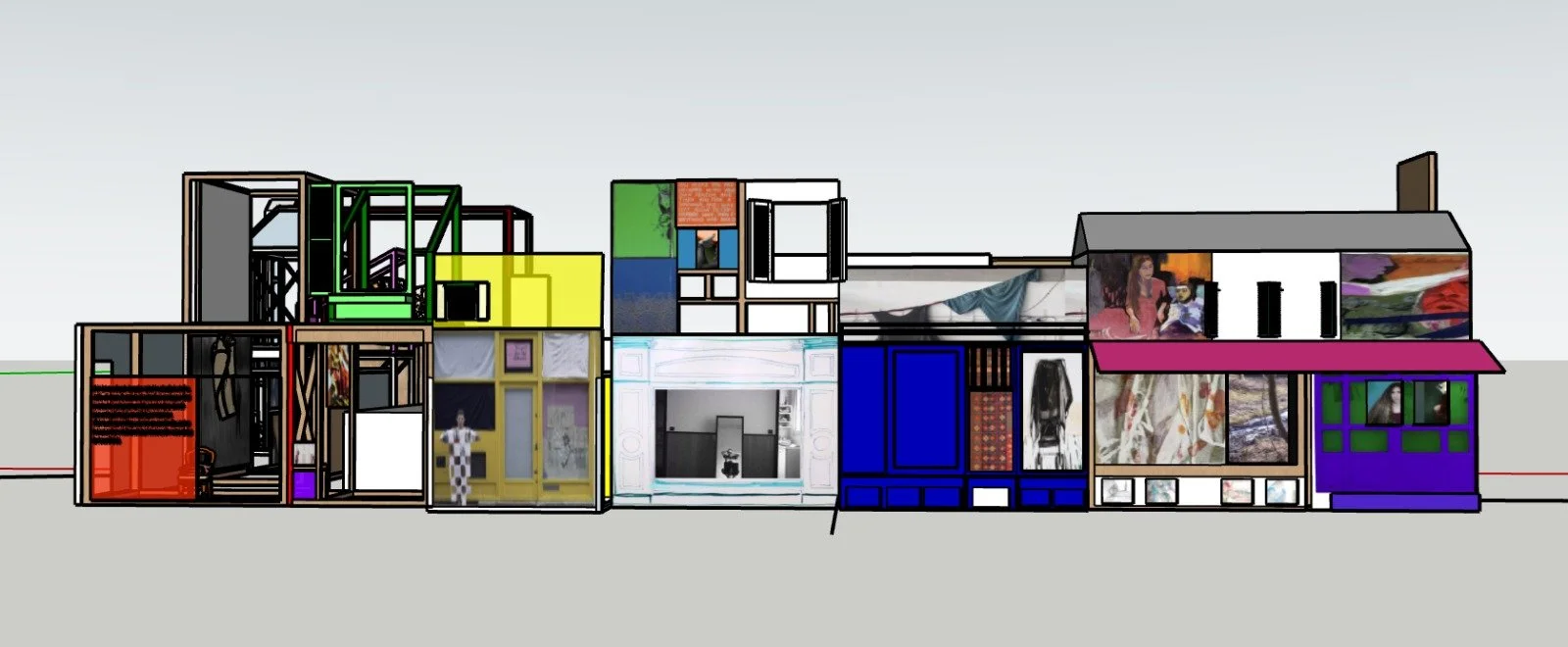
Project View of Dans Ma Rue. Courtesy of the artist
Dans Ma Rue is conceived as:
A walkable installation
A labyrinth of interconnected modules
A monumental, modular blurred painting
An environment where drawing, digital media, and performance converge
The project aligns with the post-medium condition: painting expands into environment; installation becomes narrative; architecture becomes archive.
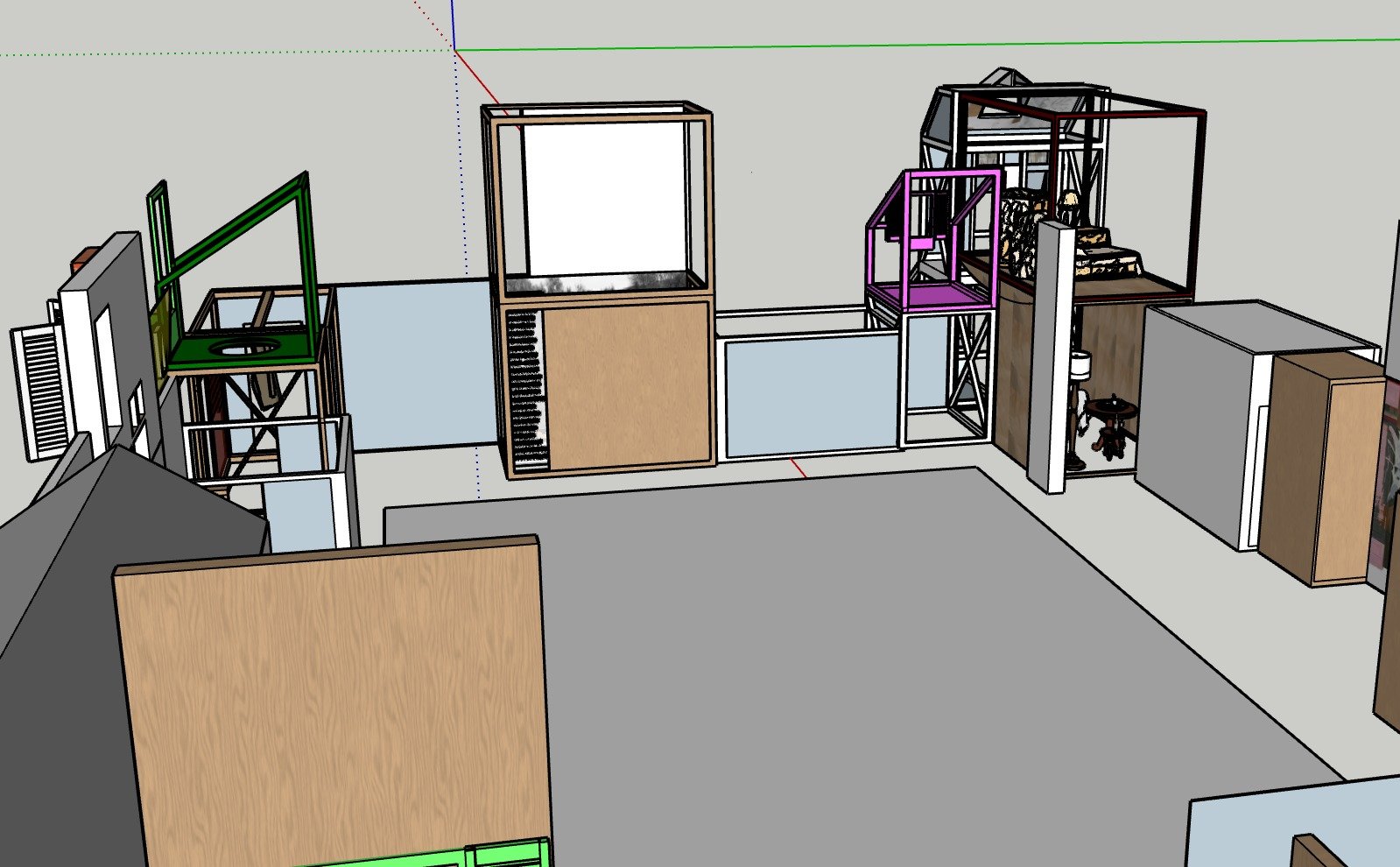
Project View of Dans Ma Rue. Courtesy of the artist
Visitors move through façades, corridors, and interstitial passages—each recalling the specificity of Parisian quartiers and the biographical resonances they hold for migrant artists.
Exhibition History and Recognition
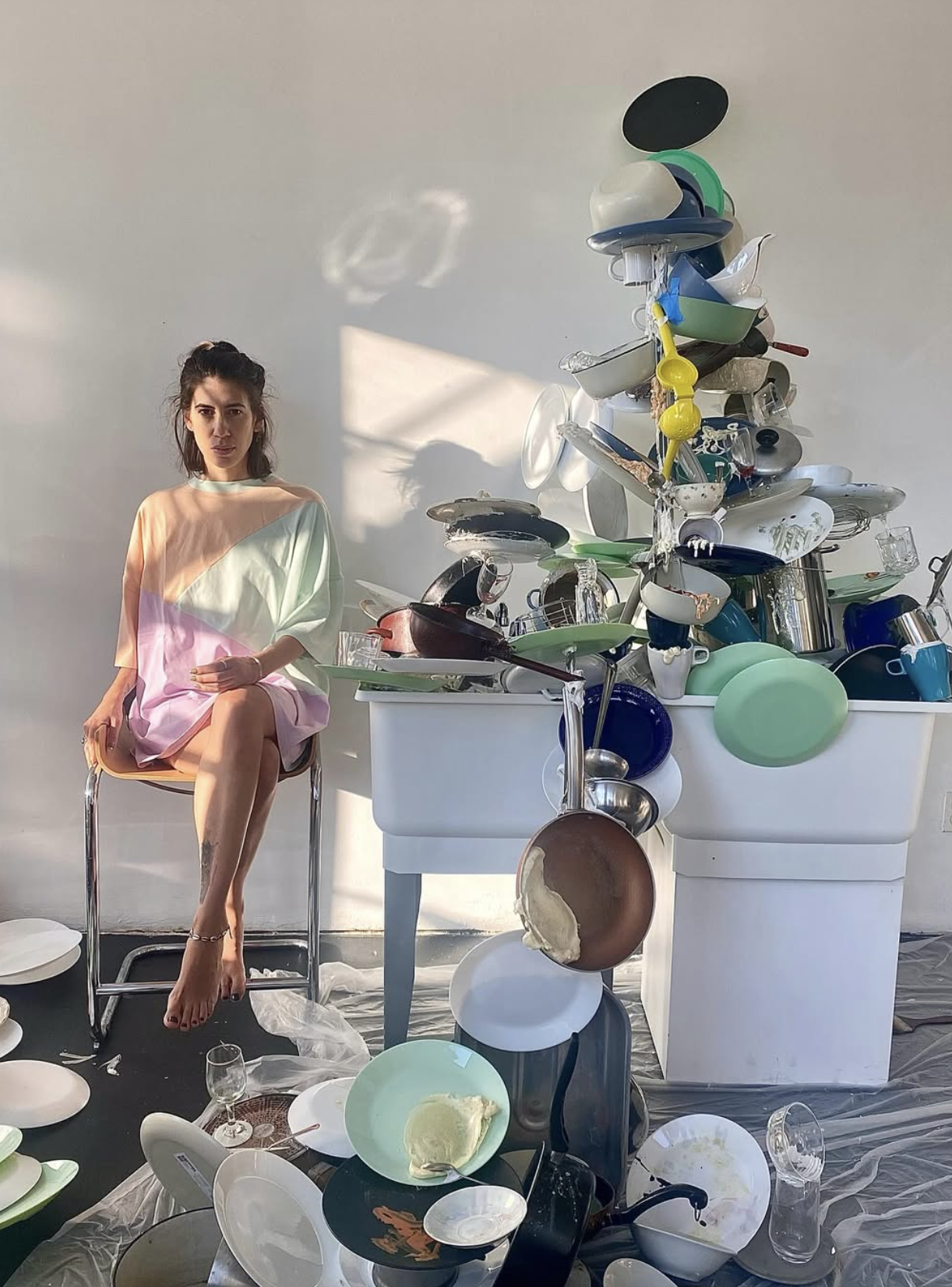
Dans Ma Rue debuted at MNAC Bucharest (2022), later traveling to:
Centrul de Interes, Cluj-Napoca, Romania
Awarded the Cultural Inact Foundation Prize (2024)
Supported by the Goethe-Institut Culture Moves Europe grant (2024)
Developed further through the Juxta Foundation monthly support program (2022–2023)
Aron’s broader career includes major institutional exhibitions, international solo shows, interdisciplinary collaborations, and experimental projects such as Our Dirty Bedroom (2023), in which she lived inside her installation for three weeks.
Her 2025 Paris exhibitions—Ce qui nous relie and A Body in Cultural Transit—reflect the maturity of her recent practice and the growing international attention to her work.
Toward a Permanent Site: A Call for Institutional Partnership
Aron imagines Dans Ma Rue ultimately housed in a large industrial hall capable of supporting its scale and immersive movement pathways. While Paris is its ideal home, the project is modular and travel-ready. Many components are already constructed and await transportation.
What the project requires now is:
1. Production support
2. A long-term institutional partner
3. Visibility at an international level
4. A dedicated site for its full realization
Potential collaborators include foundations supporting women artists, international cultural institutes, museums committed to migration narratives, and municipal art programs dedicated to public space and community engagement.
Dans Ma Rue: A Shared, Walkable Future
At its essence, Dans Ma Rue is an invitation:
To walk through someone else’s memory
To inhabit the Paris of another
To recognize how cities are built from the stories of those who arrive from elsewhere
If one sentence could summarize the project:
A walkable memory-scape where personal history meets the untold stories of women who built the city.
And the emotion Ioana Aron hopes visitors carry:
A sense of belonging—to a street, to a lineage, to a shared and evolving Paris.
Opera Art Advisory & Collective supports emerging artists whose practices expand contemporary discourse and advance cultural narratives across borders. We are committed to accompanying Ioana Aron as Dans Ma Rue progresses toward its next stage and invite cultural partners to join us in realizing this landmark project.
If you’re an institution, collector, agency, or art professional interested in partnering on Dans Ma Rue or learning more about its next phase, we’d be delighted to speak with you. You can reach us at info@operaadvisory.com, or contact our Lead Advisor, Virgil-Petru Munteanu, directly at virgil@operaadvisory.com.