Artist Spotlight: Kishwar Kiani
“My persistence and dedication to material crosses geographical boundaries.”
Winner of the prestigious Gilbert Bayes Award in 2024, Pakistani-born sculptor Kishwar Kiani has established herself as a distinctive voice within contemporary sculpture. Based in Rawalpindi, Pakistan, and working primarily in metal, she investigates the tension between structure and collapse, fragility and endurance — a visual and conceptual interplay that mirrors the dualities of her cultural experience between Pakistan and the United Kingdom.
For Opera’s Artist Spotlight series, Virgil Munteanu spoke with Kishwar Kiani about her evolving relationship with material, abstraction, and the realities of sustaining a cross-continental practice.
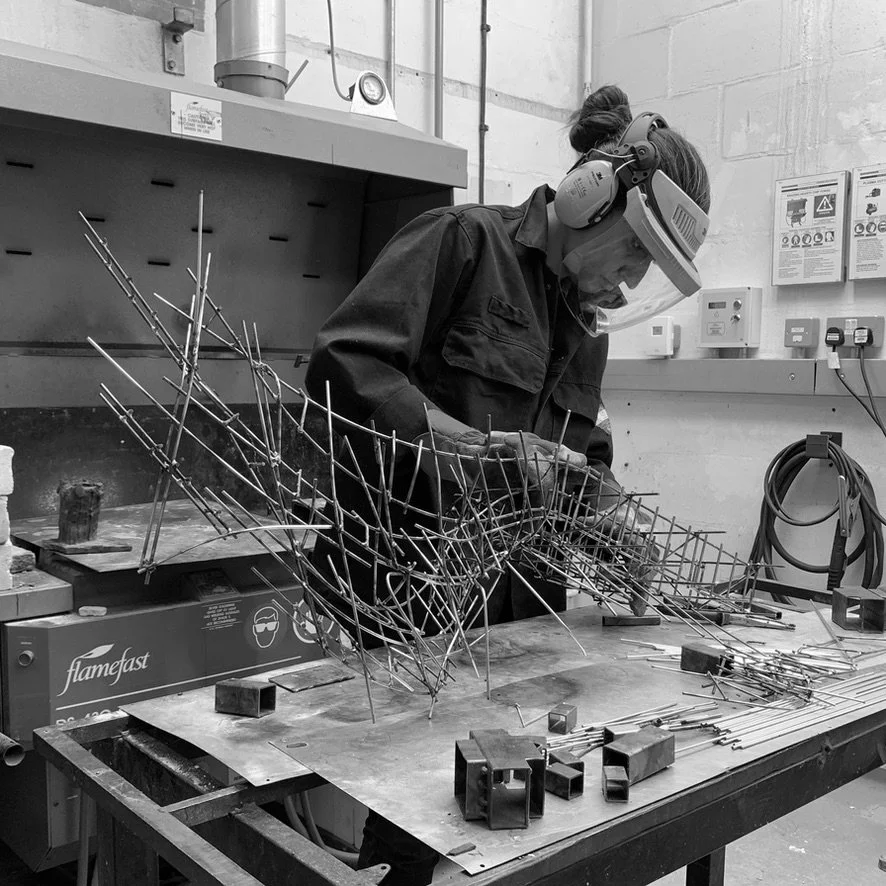
Kishwar Kiani in her studio. Image Courtesy: Kishwar Kiani
In Conversation with Kishwar Kiani
Virgil Munteanu (VM): Kishwar, congratulations on receiving the Gilbert Bayes Award. How did this recognition unfold for you?
Kishwar Kiani (KK): Thank you. For me, it was a moment of formal validation — a recognition that travels with you, wherever you go. It redefined how I view my career and my material practice, especially coming from a place where opportunities for metal sculptors are still rare. The mentorship sessions that came with the award also opened so many doors.
VM: Let’s go back to the beginning. How did you first find your way into sculpture?
KK: I always imagined I would be a painter. But painting never gave me the same high. I ventured into sculpture as a dare to myself, and it turned out to be the best decision I ever made.
My influences range from Monika Sosnowska and Cornelia Parker to Rodzy Payne and Conrad Shawcross.
Furthermore, my practice still moves between representation and abstraction — and I’ve realised that abstraction, in particular, is not easy.
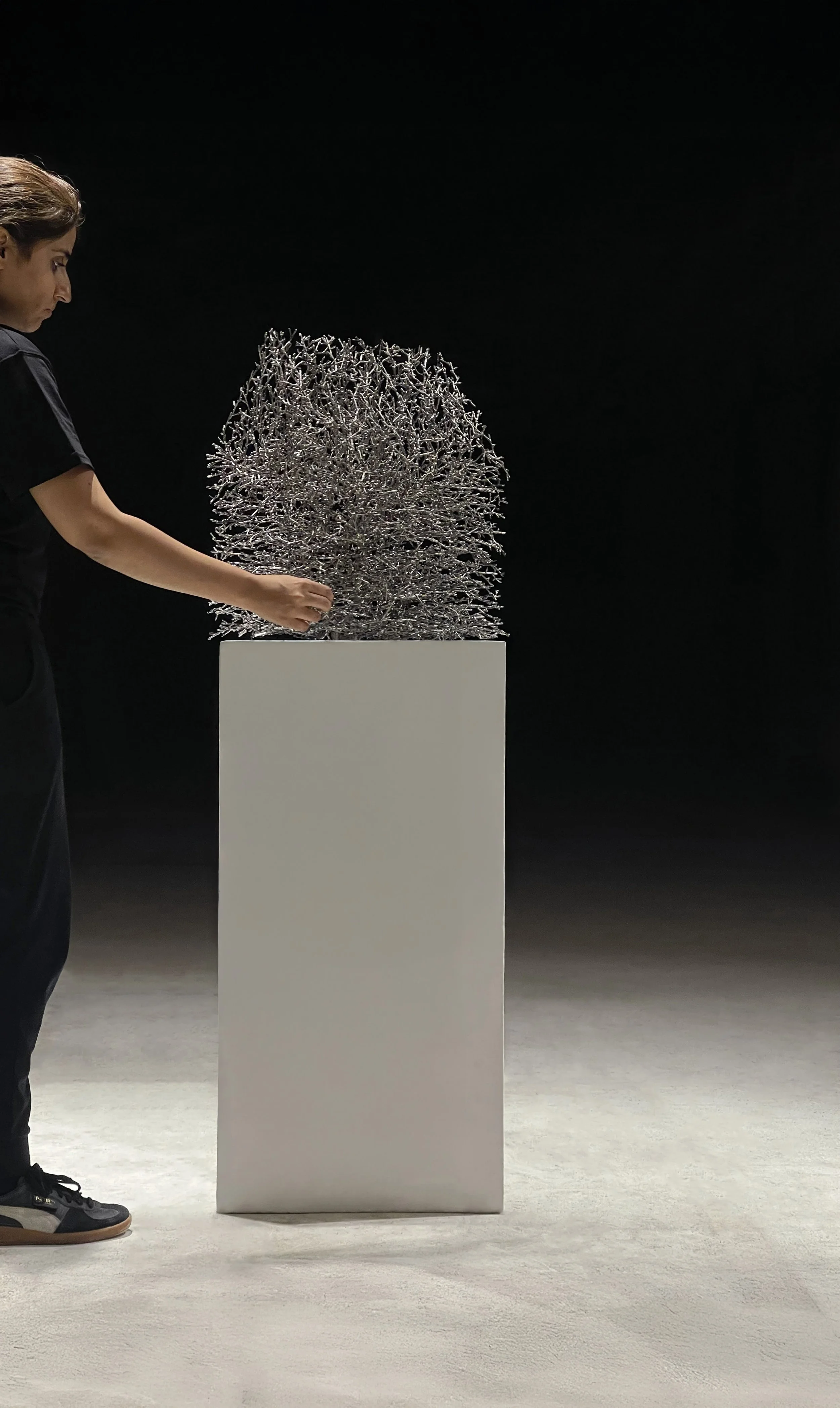
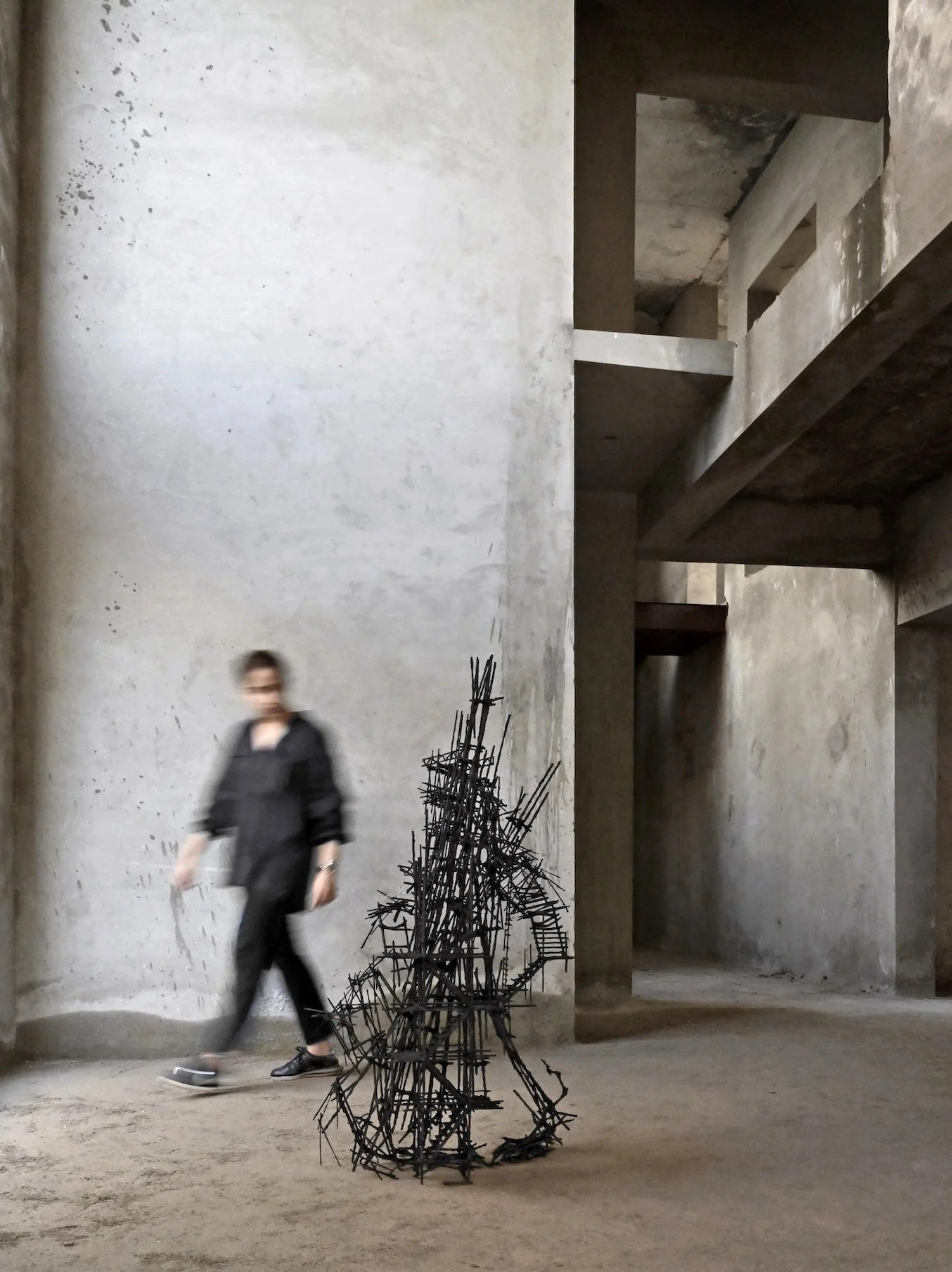
Installation view of Airbnb. Image Courtesy: Kishwar Kiani
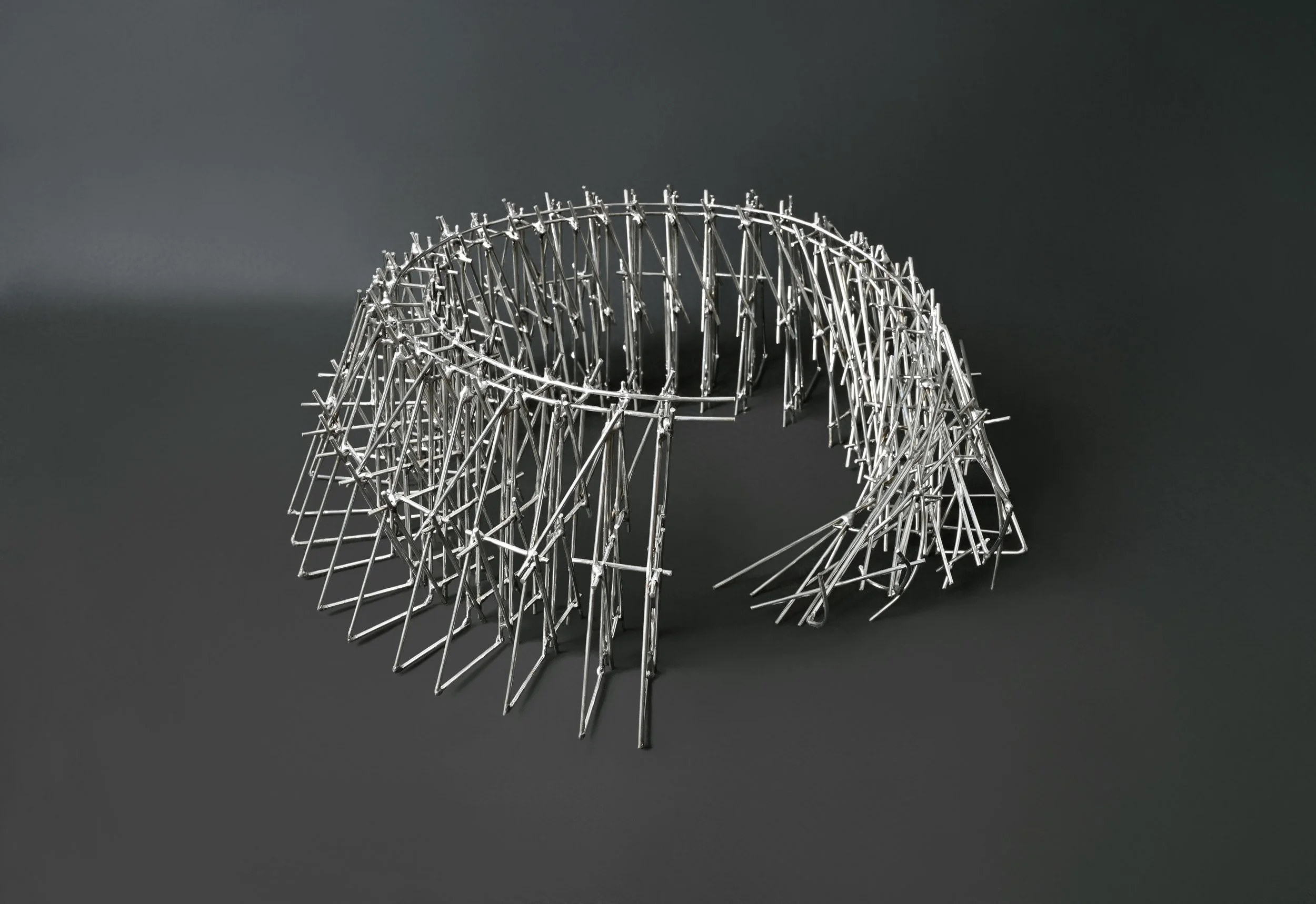
VM: The motif of scaffolding recurs throughout your practice. What does it signify to you?
KK: Initially, it appeared as a metaphor for coexistence — for the act of building and holding things together. But over time, it became far more personal. It’s about the internal architecture that shapes who we are.
Everything I create feels like an act of dismantling that — of understanding what supports me and what I must eventually let go of.
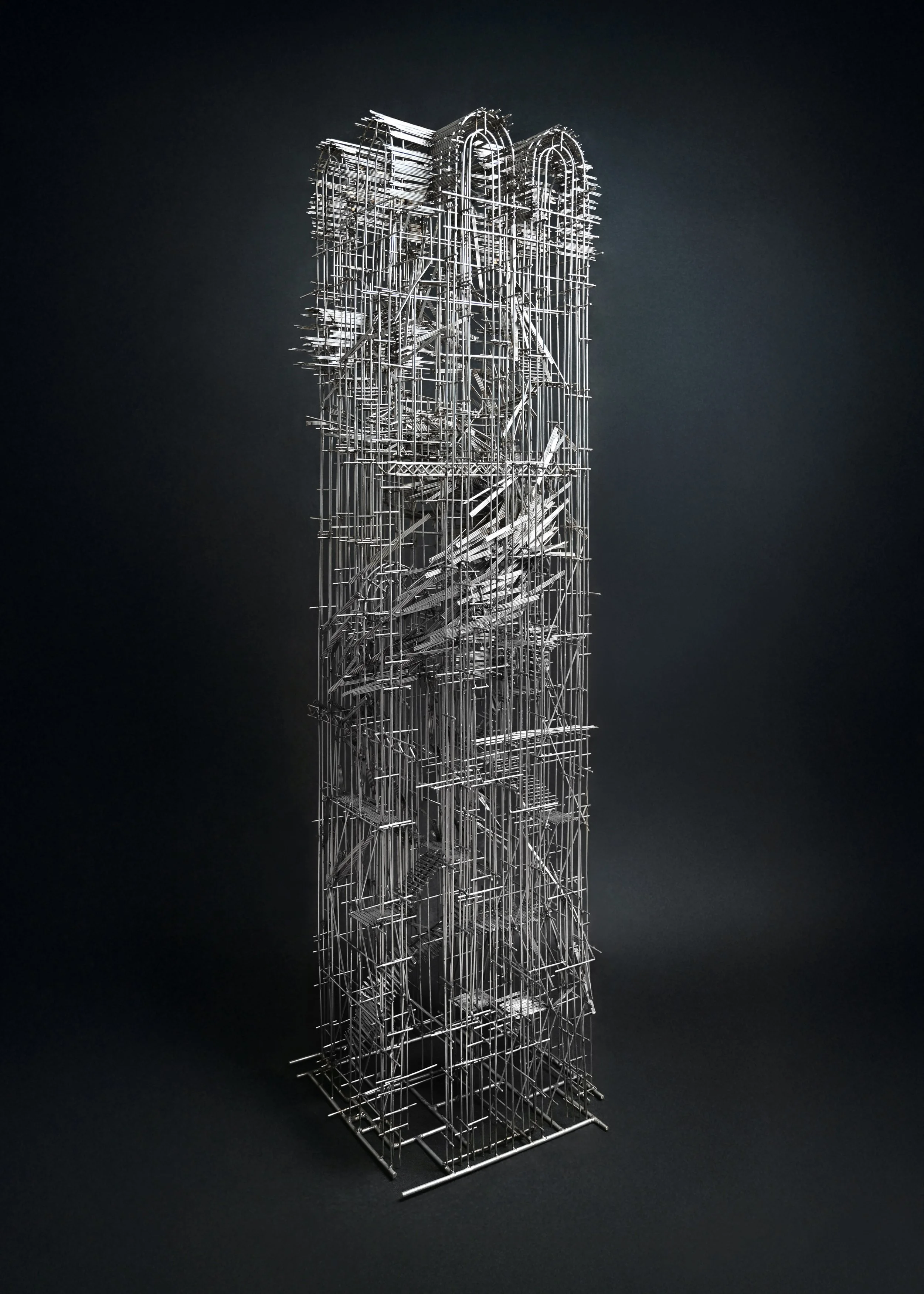
Space Between. Image Courtesy: Kishwar Kiani
VM: Your sculptures often seem to exist on the edge of disintegration. How do you think about impermanence or risk in your work?
KK: Fragility is central to my language. I’m drawn to materials and forms that feel temporary, precarious. Scaffolding is a representation of me, of my balance between order and uncertainty — and I can achieve that through any material, not just metal.
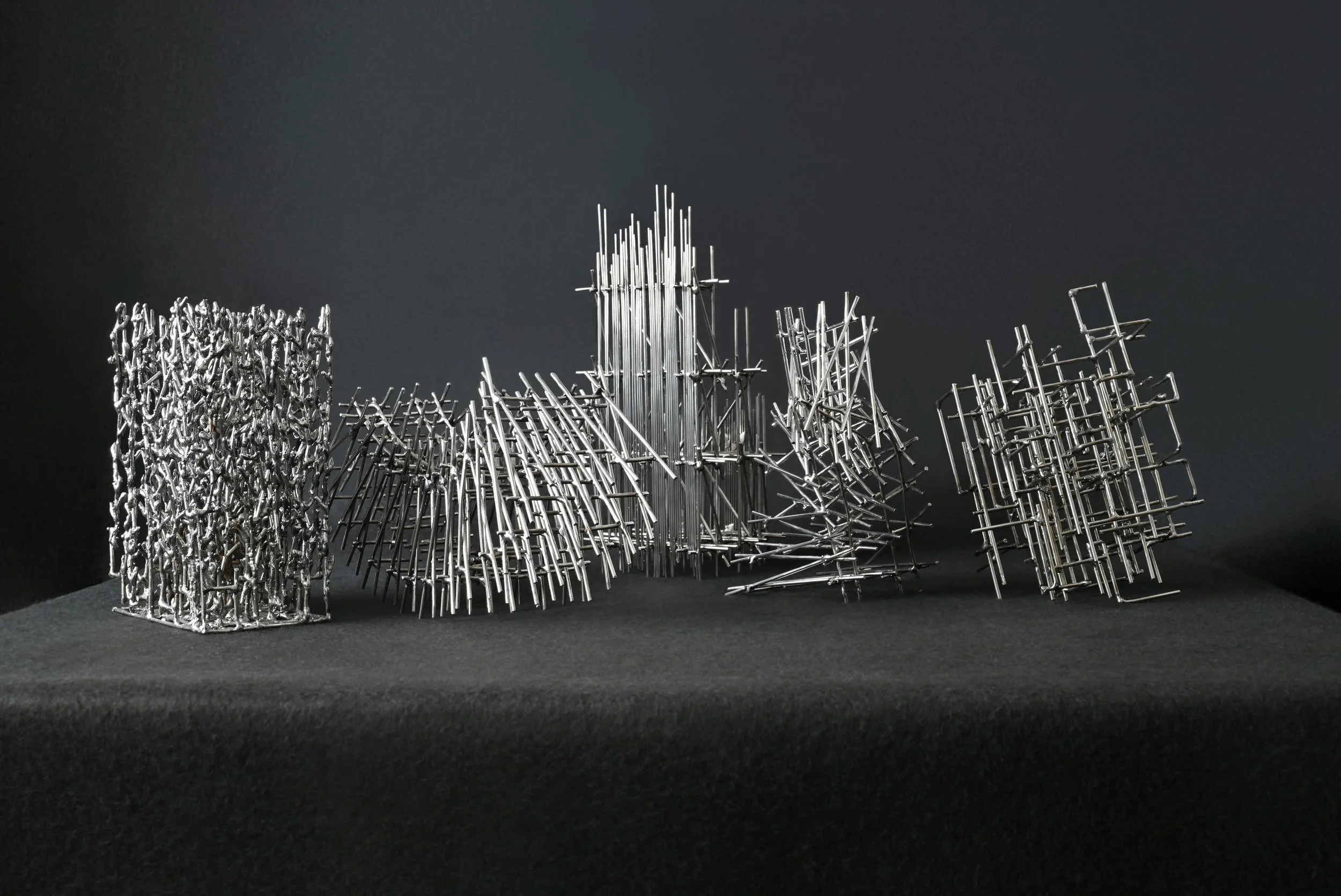
VM: You’ve said before that “every work takes form from the previous one.” How do continuity and disruption coexist in your creative process?
KK: Continuity keeps me grounded; it’s how I trace my process. Disruption keeps me alert. Nothing is ever fixed or permanent. Every work is like an unfinished sentence — I resolve it in the next one.
I enjoy the impossibility of replicating a process in exactly the same way twice; when something unexpected happens, I respond intuitively.
That tension between what carries forward and what breaks apart defines my entire rhythm.
False Relics. Image Courtesy: Kishwar Kiani
VM: You divide your time between Pakistan and the UK. How do these contexts shape your work?
KK: They each inform my practice in very different ways. In London, I find structure — a stable ecosystem that gives me the freedom to experiment and, importantly, to fail. In Pakistan, the idea of scaffolding becomes more literal and more fragile. Nothing feels permanent; everything is always being restructured.
I make different works for each context. London audiences engage more with abstraction and conceptualism, whereas in Pakistan, the market still leans toward figurative and, shall we say, “decorative” works. In Pakistan, I sometimes adapt my work for broader appeal — but that’s also what pushes me to maintain balance between integrity and accessibility.
VM: Beyond recognition, what has been most valuable to you in terms of career development?
KK: Recognition is wonderful, but what truly matters are the conversations it brings. Each award or show becomes a moment of expansion. These exchanges — the human connections — are far more valuable than any title.
“Exposure through human exchange gained in exhibitions has been far more transformative than any feather in my cap.”
Installation view of He Made Me Do It. Image Courtesy: Kishwar Kiani
VM: What advice would you give to younger artists who are trying to find international footing?
KK: Stay true to your own vision — easier said than done, I know. Don’t bend to every shift in the market; trends fade quickly. The work that is most honest will eventually find its audience.
“Work grounded in conviction leads to longevity. Recognition follows naturally from something you truly enjoy making.”
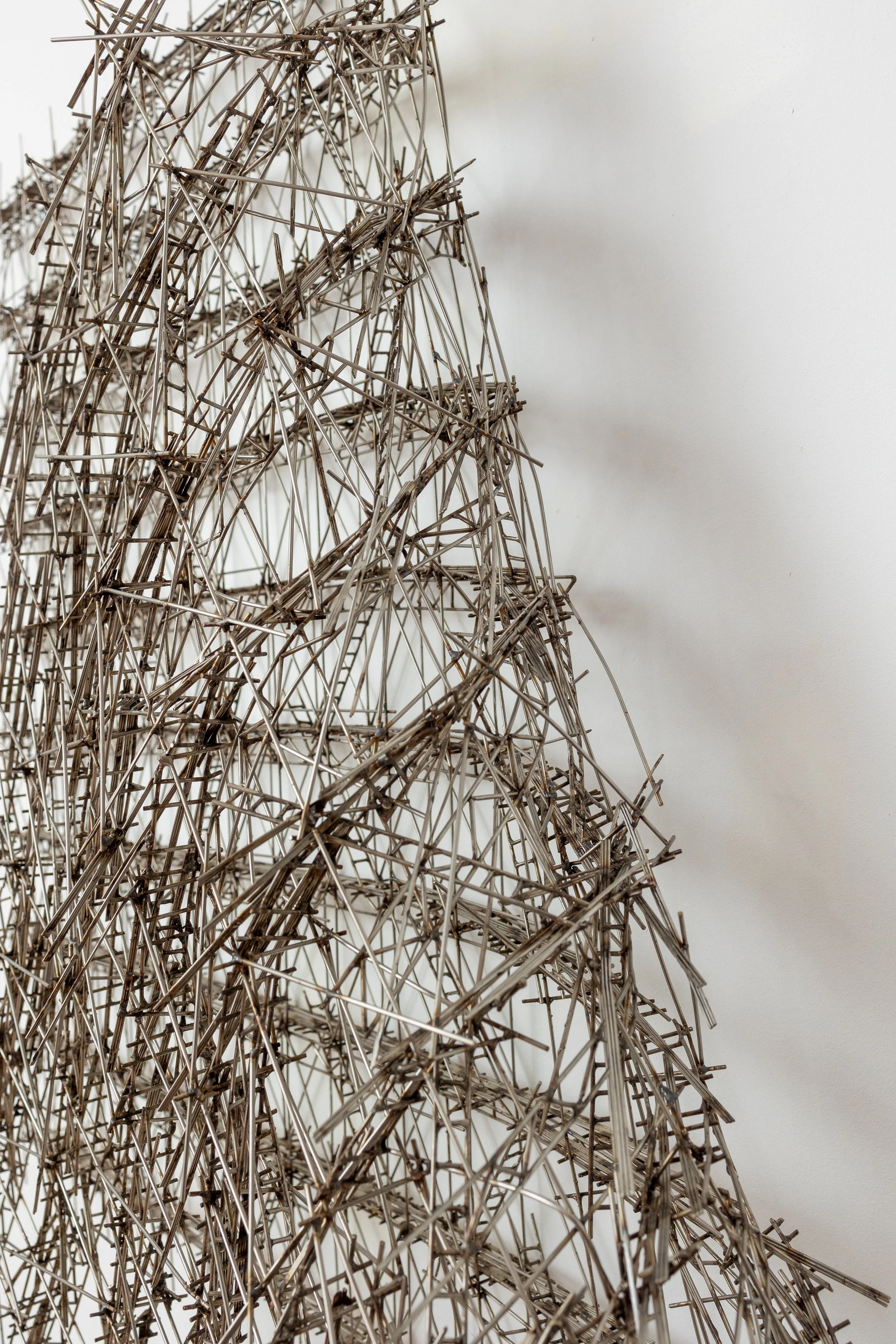
Snagging. Image Courtesy: Kishwar Kiani
VM: What’s next for you — in terms of materials or direction?
KK: I’m currently preparing for solo exhibitions in Los Angeles and Lahore, alongside a residency later this autumn. I still handle all fabrication myself. Eventually, I’ll move beyond metal — but not beyond structure. The language of scaffolding will remain at the core of my work, as far as I know.
“I want my practice to evolve toward international exchange — and I’m looking forward to seeing what Opera does in the Romanian and wider European art space. Opportunities for collaboration are what excite me most.”
Conclusion
Kishwar Kiani’s practice is one of equilibrium — between restraint and risk, solidity and disintegration.
Her works extend beyond material, becoming meditations on resilience and change. With a language rooted in persistence, she continues to build bridges across geographies and disciplines.
Enquiries regarding available works or upcoming exhibitions by Kishwar Kiani may be directed to info@operaadvisory.com or explore further via operaartadvisory.com.
Chadar. Image Courtesy: Kishwar Kiani